f.a.q.

You have questions. wE have answers.

We understand that visiting or connecting with a monastery may bring many questions, whether about our daily life, practices, teachings, or ways to offer support. This section provides clear and thoughtful answers to help you feel at ease and well-informed.

What is a Buddhist monastery?

A monastery is a place dedicated to the training and practice of Dhamma and Vinaya, the teachings and discipline taught by the Buddha. It is both a residence for monks and a peaceful refuge for lay visitors who wish to cultivate mindfulness, generosity, and wisdom.

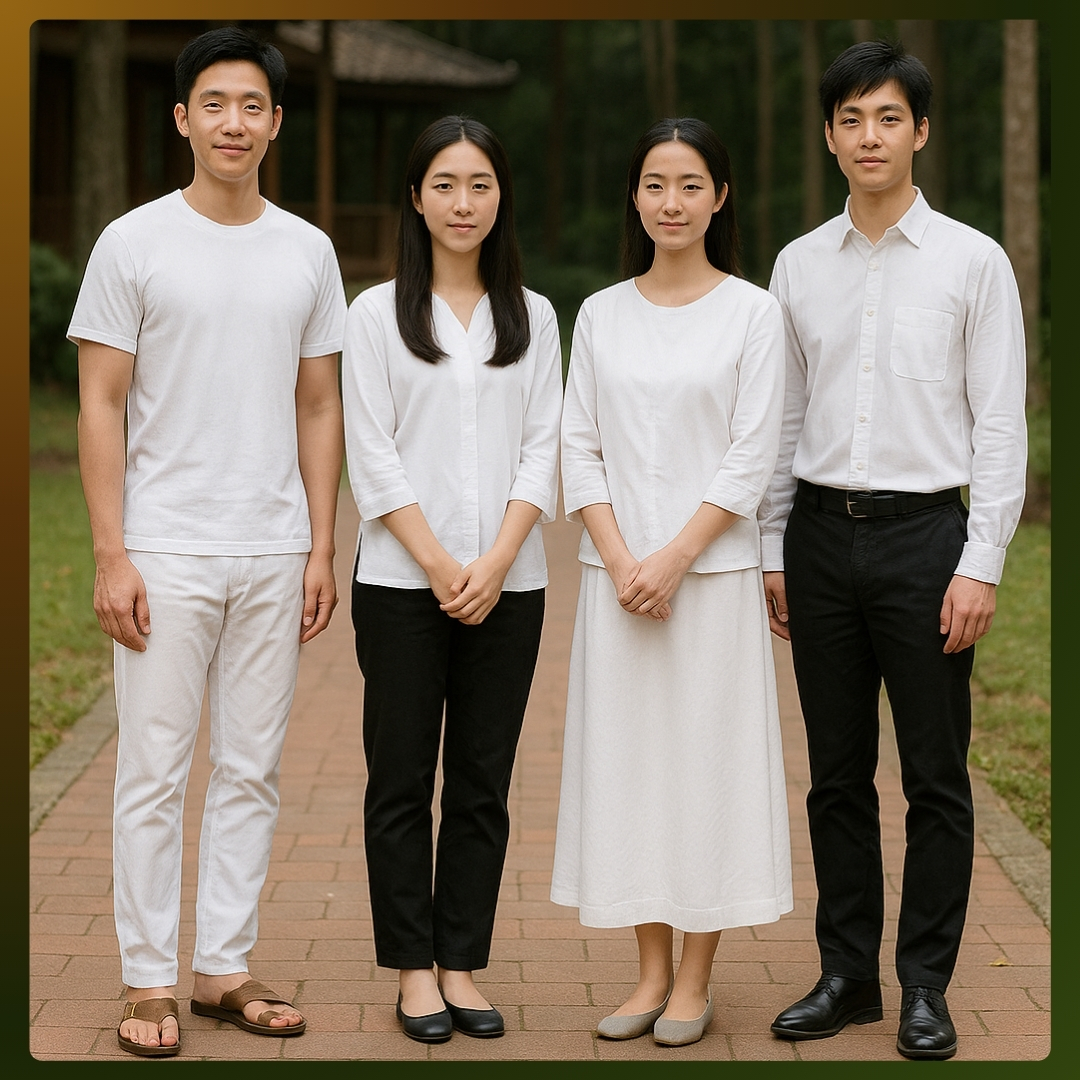
What should I wear when visiting?

Dress modestly and respectfully:

  • Clothing should cover shoulders and knees.
  • Avoid tight, transparent, or sleeveless clothing.
  • White or light-colored clothing is preferred for those coming to meditate or offer food and other requisites. 
  • Bottoms (pants or skirts) should be white, black, or dark-coloured. White is strongly preferred.
Why must I maintain Right Speech & Silence in the monastery?

Visitors are encouraged to maintain quietness and mindfulness throughout their time in the monastery.
Please avoid loud talking, laughter, or unnecessary conversation, especially near meditation areas or monks’ quarters.

When speaking, use Right Speech, words that are truthful, gentle, and beneficial. Refrain from gossip, idle talk, or criticism. Maintaining silence and mindful speech helps preserve the peaceful atmosphere and supports the practice of everyone in the monastery.

How can I support the monastery?

You can:

  • Offer requisites or donations
  • Help with building or maintenance projects
  • Offer food or sponsor utilities
  • Share Dhamma resources or encourage others to practice

All support, big or small, helps sustain the monastic community for generations to come.

Click here for more information: Support

Do I need to inform the monastery before visiting?

For short day visits, no advance notice is usually required. Visitors are welcome to join the daily food offering at 10:30 a.m., and are encouraged to arrive before 10:00 a.m. to prepare respectfully.

However, if you wish to stay overnight or participate in a retreat, please note that all lay guests are required to observe the Eight Precepts throughout their stay.

Kindly read the details here: Practice

Where is the location?

The monastery is located in a quiet and natural setting, away from busy towns, to support meditation and practice.

For directions, please refer to the: Location

We kindly encourage visitors to understand the daily schedule before coming.
Can I stay overnight at the monastery?

Those wishing to join a retreat are warmly welcome to do so with mindfulness and sincere intention. Retreats at the monastery are times of quiet practice — an opportunity to cultivate meditation, reflection, and simplicity of life.

Before coming, please take time to read the Retreat Guidelines carefully to understand the daily routine, precepts, and expectations during your stay.

What are the Eight Precepts for lay visitors?
  1. Refrain from killing living beings.
  2. Refrain from taking what is not given.
  3. Refrain from all sexual activity.
  4. Refrain from false speech.
  5. Refrain from intoxicants.
  6. Refrain from eating after noon.
  7. Refrain from entertainment, adornment, or beautification.
  8. Refrain from using luxurious beds or seats.

These precepts support a peaceful and mindful environment conducive to meditation.

Are meals provided?

The main meal 10:30AM (lunch) are often provided through the generosity of lay supporters.
After midday, no solid food is consumed by monastics. Visitors observing Eight Precepts also refrain from eating after noon.

What is the daily activity?

The monastery follows a simple routine centered on mindfulness, meditation, and community living.

Visitors are welcome to join or quietly observe the following daily schedule: Monastery Daily Schedule  

Can women stay at the monastery?

Yes. Women are welcome to stay at the monastery for short periods of practice or retreat. Separate accommodation areas are provided to ensure comfort and proper observance of monastic discipline.

However, it is very important to maintain proper boundaries with the monks. Close or private contact between women and monks is strictly NOT allowed under monastic discipline. Visitors are asked to be mindful and respectful at all times to help preserve the purity of practice within the monastery.

Can I apply for short-term ordination?

Yes. Short-term ordination programmes may be offered. Applicants must submit an application for review.

Ordaining as a bhikkhu is a profound opportunity to develop one’s parami, live simply, and walk the Noble Path under the guidance of the Sangha. At the same time, it is a  serious commitment that requires clarity, readiness, and a heart truly inclined toward renunciation.

Therefore, we kindly request all applicants to read the pre-requisites with mindfulness.

Do candidates need to shave head and eyebrows?

Yes. Full shaving is required as part of the ordination training.

Are there fees for ordination?

There is no fee to receive ordination.

However, ordination requires certain personal requisites that every candidate must prepare. These are not “fees,” but necessities for monastic life. They usually include:

  • Robes (upper robe, lower robe, outer robe)
  • Alms bowl
  • Belt, strap, sitting cloth
  • Toiletries and basic personal items
  • Shaving kit
  • Towel and simple necessities
  • Others

Some monasteries may assist with requisites if needed, but generally candidates take responsibility for preparing their own requisites as part of cultivating humility, gratitude, and readiness for monastic discipline.

Can females ordain?

Yes. Females may ordain as Mae Chi, which is a renunciant form of practice for women in the Thai Buddhist tradition. Mae Chi observe the Eight Precepts, live a monastic lifestyle, and cultivate meditation, discipline, and simplicity.

Mae Chi are not bhikkhunī (fully ordained nuns), but they live a life of renunciation and Dhamma training under the guidance of the Sangha.

Those interested must first visit the monastery to practise the Eight Precepts for a period of time. If the practice is suitable, the Sangha may advise whether you may proceed with Mae Chi ordination.

How can I contact the monastery?

You may reach the monastery through Messenger or email. Our volunteers will reply based on their available time. Please note that all enquiries should be non-urgent matters, as the monastery environment prioritizes practice, seclusion, and simplicity.

Can I request to message a monk?

We kindly ask that visitors do not message the monks directly.
To protect their seclusion and meditation practice, all communication should go through the monastery office or volunteers. They will help attend to your enquiry and pass any necessary messages at the appropriate time.

Can I volunteer at the monastery?

Yes, the monastery welcomes sincere volunteers. Offering your time and effort is a beautiful form of dāna and helps support the Sangha and fellow practitioners.

What kind of volunteer work is available?

Volunteers may help with:

  • Cleaning and maintaining the monastery grounds
  • Organising the pantry area and meals offered
  • Gardening, sweeping, and general upkeep
  • Preparing the hall for meditation and Dhamma activities
  • Assisting during retreats or special events
  • Involving in recycling tasks (sorting, cleaning, organising recyclables)
  • Administrative or technical support (when needed)

These tasks are simple, wholesome, and supportive of the monastic environment.

If you are interested in offering your time or have a special skill or contribution, you are welcome to visit the monastery and inform the monk in charge. The Sangha will advise how your support can be meaningfully offered.

What is the schedule of the pindapata route?

The Pindapata route schedule shows the daily locations and timing of the monks’ alms round. Supporters may refer to the link to know where and when to offer food on each day.
Pindapata Routes

What type of food should I offer?

You can offer freshly prepared, ready-to-eat food such as rice, fruits, cooked vegetables, or simple snacks. It’s best to offer food that is wholesome, respectful, and appropriate for a monastic lifestyle, no meat from animals killed specifically for the offering, and avoid food that’s overly luxurious or wasteful. If possible, keep your portions moderate and manageable for the monks to carry. Most importantly, offer with a pure heart, that’s what truly matters.

Do I need to be a Buddhist to participate pindapata food offering?

Not at all. Pindapata is open to everyone, regardless of religion or background. The act of giving is universal, and anyone with a heart of kindness and respect is warmly welcome to join. Many people participate simply to experience peace, generosity, and community.

Can I offer food for special occasions (birthdays, anniversaries, etc.)?

Yes, dedicating an offering for a special day is a meaningful way to celebrate. You can mentally dedicate the merit of your offering for a loved one, for good health, or in memory of someone who has passed away. There’s no need to announce it, just offer silently with a clear intention in your heart.

Can I offer food at the monastery if I miss the alms round (pindapāta) which start from 8AM at different location instead?

Yes. If you are unable to participate in the pindapāta (alms round)  when the monks go out to different locations which usually starts from 8AM, you may still come to the monastery to offer food. Kindly note, offerings should be made at 10:30A.M. , and you shall arrive before this time.